365.Merch · Articles
DTF, screen printing or embroidery: what to choose for team merch
365.APParel team·Published
You can put a logo on a garment in three main ways: DTF printing, screen printing and embroidery. They look and feel different, and each suits its own run size. Four things decide it for team merch: how many pieces you need, how many colors the logo has, which garment you print on, and where your team will wear it.
The short answer
- A small logo on the chest or sleeve of a hoodie or sweatshirt: embroidery.
- A large artwork, many colors, gradients or a photo: DTF.
- Simple graphics in a few colors and a large run: screen printing.
- Several garments in one order: combine. Embroidery on hoodies, DTF on T-shirts.
DTF printing for complex artwork
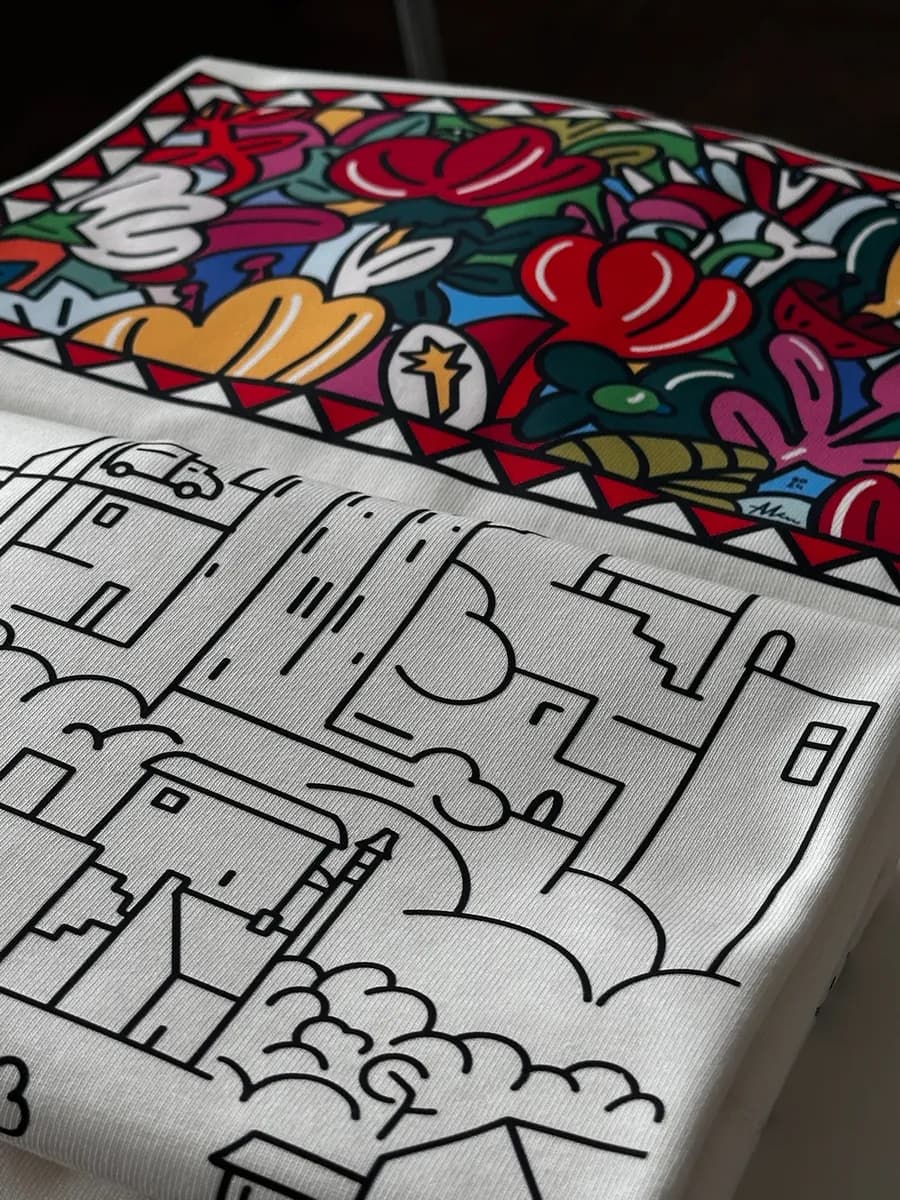
We print the artwork on a film, then transfer it to the fabric with heat. DTF carries color and detail in full: gradients, thin lines, small text, illustrations. It needs no separate screen for each color, so it suits smaller runs and orders where each department or event has its own design.
The print sits on the surface of the fabric and feels like a thin layer. You feel it on large solid areas and barely notice it on a compact print. If your artwork is an illustration, or you have several design variants, start with DTF printing.
Screen printing for simple artwork and large runs
Screen printing pushes ink through a mesh stencil. Each color needs its own screen, and preparing the screens takes time. Screen printing pays off on large runs and simple artwork: clean solid fills, bold lettering, a clear mark.
On a small run with many colors, preparation takes more of the order than the printing itself, and DTF makes more sense. For a simple logo the whole team orders at once, pick screen printing.
Embroidery for a raised logo
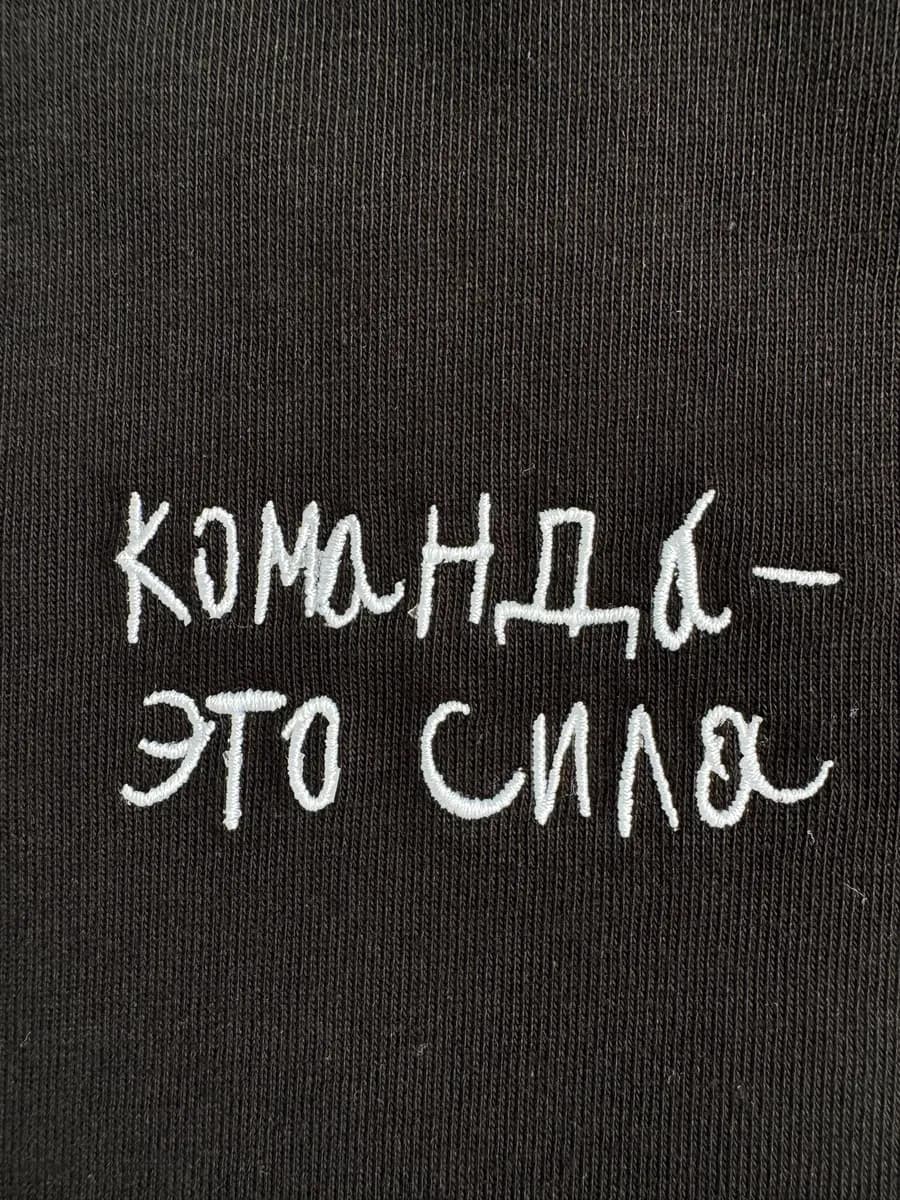
We stitch the logo in thread, so the thread goes into the fabric instead of sitting on top of it. The mark has relief: you see it and feel it. Embroidery works well for compact logos on the chest or sleeve.
Thin lines and very small text blur together, because thread has thickness. Large solid areas come out dense and heavy. Embroidery suits a compact mark; for a large artwork, choose print. You will find more in the embroidery section of our merch page.
The three techniques side by side
| DTF | Screen printing | Embroidery | |
|---|---|---|---|
| Best for | Complex artwork, illustrations | Simple graphics, large runs | A compact logo |
| Colors and gradients | Any, gradients included | Each color needs its own screen | Limited to thread colors |
| Small run | Suitable | Preparation outweighs printing | Suitable |
| Large run | Suitable | The main use case | Suitable, time grows with quantity |
| Feel | Thin film layer | Thin layer of ink | Relief, thread in the fabric |
| Fine detail | Reproduced | Reproduced if the graphics are clean | Limited by thread thickness |
We look at each design separately, and the table is a starting point.
The garment matters too
We make merch on 365.APParel garments in 100% cotton. The Basic T-shirt is 250 g/m², the Oversize T-shirt 300 g/m², the hoodie and sweatshirt 380 g/m².
Fabric density affects the technique. Embroidery keeps its shape better on dense fabric. On a lighter fabric, a large dense embroidery can pull the cloth, so for a T-shirt a print or a compact mark is the safer choice. If your team needs sportswear in synthetic fabric, that is separate work: printing on sports fabrics and polyester.
The garments come in sizes XS to 5XL, with two height versions per size: up to 180 cm and from 180 cm. Your team has people of different heights, and the two versions cover them. You can see and touch the fabric in our showrooms in Belgrade and Novi Sad.
What to send to get started
For a quote we need four things:
- The logo in vector format (a layered PDF works too), at 1:1 scale.
- Which garments you want and how many, for example T-shirts and hoodies.
- Sizes: a list or a rough split across the team.
- Placement: chest, back, sleeve.
Minimum runs: DTF and embroidery start at 10 pieces for companies and at 1 piece for individuals; screen printing starts at 20 pieces.
You do not have to choose the technique in advance. Describe the task and we will prepare a quote. The whole order, step by step, is in How to order team merch.
